



One of the most common questions we hear from clients planning a new signage project is, "does the material really matter that much?" The short answer is yes - significantly. Using an indoor-only material on an exterior sign is one of the fastest ways to end up with a warped, faded, or completely failed sign within a year or two. And on the flip side, reaching for heavy exterior-grade materials for a lobby sign is often unnecessary and expensive. Understanding the difference helps you get the right sign the first time, at the right cost, with a lifespan that makes sense for where it is going.
Why Material Choice Is More Than a Budget Decision
Material selection affects four things: durability, appearance, longevity, and cost. An exterior sign lives in a world of UV rays, rain, temperature swings, and - if you are in Augusta - summer heat and humidity that can be genuinely brutal on materials not built for it. An interior sign lives in a climate-controlled environment where appearance is the primary concern and weather resistance is irrelevant.
Getting this right upfront avoids one of the most frustrating scenarios in signage: a sign that looks perfect on installation day and looks terrible eighteen months later because it was made for the wrong environment.
Exterior Sign Materials: Built to Survive the Elements
When a sign is going outside, the material has to handle UV exposure, moisture, temperature changes, and wind - year after year. These are the workhorses of the outdoor sign world.
Aluminum
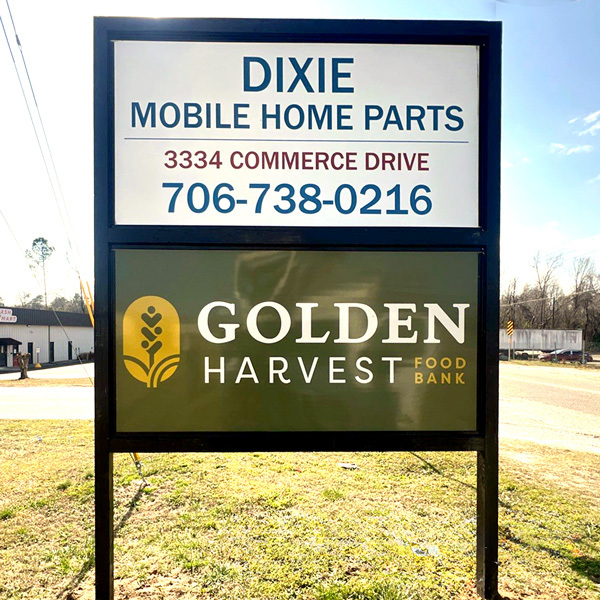
Aluminum is the most widely used exterior sign material for good reason. It is lightweight, rust-resistant, holds paint and vinyl graphics extremely well, and holds up through years of weather exposure without warping or deteriorating. You will find aluminum in building signs, post and panel signs, monument sign faces, parking signs, and construction site signs. It comes in a range of thicknesses depending on the application - thinner gauges for flat panel signs, thicker stock for applications requiring structural rigidity.
Aluminum Composite Material (ACM)
ACM - sometimes called Dibond - is made of two thin aluminum sheets bonded to a lightweight polyethylene core. The result is a panel that is exceptionally rigid and flat while being lighter than solid aluminum of comparable thickness. ACM is a go-to material for large-format exterior signs where flatness and weather resistance matter. It machines cleanly, holds graphics sharply, and handles long-term outdoor exposure well.
HDU Foam (High-Density Urethane)
HDU is a dense, carveable foam material that looks remarkably like wood - but does not rot, crack, or absorb moisture the way wood does. It is the material of choice for dimensional exterior signs, carved monument sign faces, and architectural sign elements that need texture and depth. HDU holds paint well and can be finished to mimic wood, stone, or metal depending on the design intent.
Corrugated Plastic (Coroplast)
Corrugated plastic is the lightweight, economical option for temporary outdoor signage. It handles short-term weather exposure reasonably well and is easy to install and replace. It is ideal for construction site signs, temporary directional signs, event signage, and real estate signs - situations where the sign has a defined short lifespan and cost efficiency matters. It is not a long-term outdoor solution and was never meant to be.
Interior Sign Materials: Where Appearance Takes Center Stage
Indoor signs do not have to survive rain or direct sun. What they have to do is look sharp, reinforce your brand, and hold up to the daily wear of people moving through your space.
Acrylic
Acrylic is the most popular interior sign material in commercial settings, and for good reason. It is available in clear, frosted, and virtually every color imaginable, with glossy or matte finishes. It takes dimensional lettering beautifully, machines with precision, and gives a clean, modern, professional appearance that works in lobbies, offices, healthcare facilities, and educational spaces alike. Acrylic can also be backlit for a dramatic, illuminated effect. It is not weather-rated - sun and moisture will cause it to fade and warp over time - so it stays indoors.
PVC (Sintra)
PVC board is lightweight, smooth-surfaced, and highly versatile for interior applications. It is commonly used for room identification signs, nameplates, interior directional signs, and shorter-term displays. It can be painted, printed on directly, or wrapped with vinyl graphics. While PVC can handle covered or sheltered exterior locations, it is not recommended for full sun and rain exposure over the long term.
Brushed Aluminum and Metal Finishes
Yes, aluminum shows up indoors too - but for completely different reasons than outdoors. Brushed aluminum wall signs and dimensional metal lettering are a popular choice for corporate offices, medical facilities, and professional environments where a high-end, architectural appearance is the goal. The look is sleek, modern, and durable. Brushed aluminum with standoff mounting is particularly striking in lobby and reception environments.
Wood and Specialty Materials
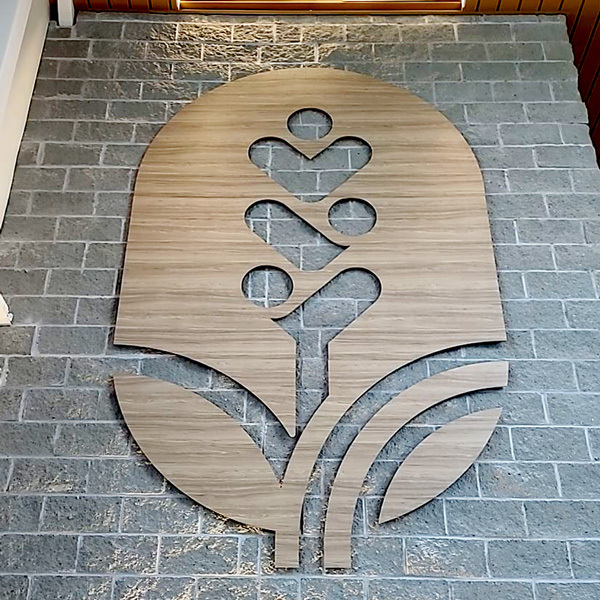
Wood, reclaimed materials, and specialty substrates like chalkboard surfaces bring warmth and character to interior branding - popular in restaurants, boutiques, breweries, salons, and any space with a more organic or rustic brand identity. These materials are interior-only and require a covered, climate-controlled environment to maintain their appearance.
Side-by-Side: A Quick Reference
Material | Best For | Interior | Exterior | Notes |
|---|---|---|---|---|
Aluminum | Building, parking, panel signs | Yes | Yes | The most versatile option overall |
ACM / Dibond | Large flat panel exterior signs | Yes | Yes | Lightweight with excellent rigidity |
HDU Foam | Carved dimensional signs | Yes | Yes | Looks like wood without the rot |
Corrugated plastic | Temporary construction/event signs | Yes | Short-term | Not a long-term outdoor material |
Acrylic | Lobby, office, ADA signs | Yes | No | Fades and warps in UV and moisture |
PVC / Sintra | Room signs, nameplates, displays | Yes | Sheltered only | Not rated for full weather exposure |
Brushed aluminum | Corporate lobby, wall signs | Yes | Yes | Used indoors for aesthetics, not durability |
Wood / MDF | Rustic or branded interiors | Yes | No | Interior or covered only |
Can You Use Exterior Materials Indoors?
Generally, yes - you just may be paying for durability you do not need. An aluminum sign in a lobby will look and function fine. Whether it makes design and budget sense is a different question. In many cases, a material like acrylic or brushed aluminum is the better choice for an interior application because it is designed to look refined in an indoor setting, not just to survive the weather.
The reverse - using interior materials outdoors - is where the real problems happen. Acrylic yellows and hazes in UV exposure. PVC warps in heat. Foam core disintegrates in the first rain. If there is any chance a sign will face sun or moisture, the material needs to be rated for it.
A Note on the Augusta and CSRA Climate
This matters more than people expect. Augusta summers bring intense heat, high humidity, and afternoon storms that put real stress on sign materials. A material that performs adequately in a milder climate may fail significantly faster here. When we specify materials for exterior projects in Augusta and the CSRA, we account for the local climate - not just general weather resistance. It is one of the reasons working with a local sign company that knows your environment is an advantage over ordering online.
How Keen Signs Helps You Choose the Right Material
Choosing the right material is part of what our account managers and production team do every day. When you bring us a project, we ask the right questions - Where is this going? How long do you need it to last? What is the surrounding environment? What does your brand require aesthetically? - and recommend materials that match the real-world conditions your sign will live in.
Whether you need a carved HDU monument sign at a property entrance, an acrylic dimensional logo in a corporate lobby, or a full package of aluminum construction site signs for a development project, our in-house production team handles design, fabrication, and installation from start to finish.
Ready to Talk About Your Project?
If you are planning a new sign - whether it is going on a building facade, in a lobby, or out on a jobsite - let us help you get the material right from the start. Contact Keen Signs & Graphics at (706) 364-2151 or submit an Estimate Request at keensigns.com.
Keen Signs & Graphics is a full-service sign company serving Augusta, GA and the Central Savannah River Area.
