



What Signs Do Churches and Nonprofits Actually Need? A Planning Guide for Faith Organizations
Every organization comes to the signage conversation from a different starting point. Some churches have been working from a single outdoor reader board for decades and aren't sure where to begin. Some nonprofits are moving into a new building and have a running list of, "we know we need something here," moments they haven't been able to fully articulate. Some are in the middle of a capital campaign and realize signage is the piece of the puzzle they haven't planned for yet.
Wherever you're starting from, the question tends to be the same: what do we actually need?
This guide breaks it down by category from exterior to interior; so you can think through your own facility and identify what applies to your situation.
Start Outside: Exterior Identification and Monument Signs
The first sign most organizations think about is the one at the street. For churches and nonprofits, exterior identification does a lot of heavy lifting.
It tells first-time visitors they've found the right place. It communicates service times or upcoming events to people driving by. And it signals to the community that your organization is present, active, and established.
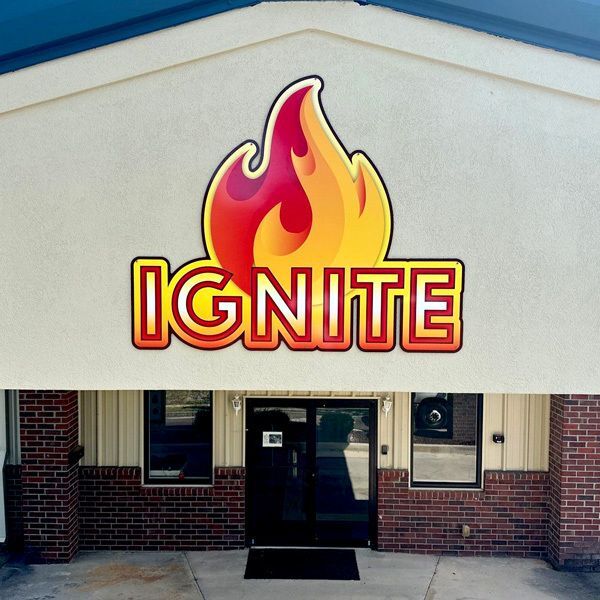
Building signs display the organization's name and are visible from a distance. They're mounted directly to the building facade and are often one of the first investments a new or relocating organization makes.
Monument signs are freestanding, ground-level structures positioned at the property entrance. These work well for organizations with a campus-style layout, a setback building, or shared parking.
What should your exterior signage should accomplish? Clear property identification from the road, easy driveway navigation, and a visual presence that reflects the character of your organization.
Don't Skip Parking and Directional Signs
Parking and directional signage often gets treated as an afterthought - until visitors can't figure out where to park, which entrance to use, or how to find the main office once they're on the property.
For organizations that host regular events, welcome new visitors frequently, or operate across a multi-building campus, directional signage is not optional. It's the difference between a guest feeling welcomed and a guest feeling lost.
Parking signs designate spaces, identify accessibility parking, communicate reserved areas, and direct vehicle flow in larger lots.
Directional and wayfinding signs guide people from the parking area to the right entrance - and for campuses with multiple buildings, they help visitors navigate once they've arrived.
A church that regularly welcomes first-time guests should think through this experience from the perspective of someone who has never set foot on the property before. What signs would they need, and where?
ADA-Compliant Interior Signage: Required, Not Optional
This is where many faith organizations discover a legal requirement they didn't know they had.
Under the Americans with Disabilities Act, buildings that are open to the public are required to have ADA-compliant signage on permanent interior rooms and spaces. This applies to churches and nonprofits, not just commercial businesses.
ADA-compliant signs on permanent rooms must include raised tactile characters, Grade 2 Braille, specific color contrast ratios, and correct mounting height and placement. "Permanent rooms" include restrooms, stairwells, exits, and other fixed-function spaces - any room that consistently serves the same purpose and is accessible to the public.
For most churches and nonprofits, that means bathrooms, nurseries, fellowship halls, administrative offices, and similar spaces throughout the building.
The good news: ADA signage doesn't have to be generic or institutional-looking. Finish options, frame materials, and color choices can be selected to complement your interior design rather than clash with it.
Interior Branding and Mission Graphics
Beyond compliance, interior signage is one of the most powerful tools a faith organization has for communicating who it is.
This is where signage shifts from "where do I go" to "who are we."
Mission statements and core values displayed in lobby and gathering areas orient visitors immediately. Done well, they communicate the heart of an organization before a person has spoken to anyone on staff.
Scripture and inspirational text applied to walls - painted directly or installed as vinyl graphics - create an environment that reflects the character of a congregation or ministry without requiring a renovation.
Donor walls and recognition displays honor contributors, mark milestones, and tell the organization's story. These are especially meaningful for nonprofits where donor relationships are central to what the organization is able to do. Golden Harvest Food Bank and Community Ministries of North Augusta are two local examples of organizations whose recognition signage reflects a genuine commitment to the people who made their work possible.
Interior wayfinding systems - room numbers, department identifiers, and directional signs within a building - keep people moving efficiently and reduce the amount of time staff spend directing traffic during events and services.
Event and Campaign Signage: The Category That Changes Most Often
For organizations that host seasonal programs, community events, or capital campaigns, there's a whole category of signage that needs to flex with the calendar.
Banners and temporary signage communicate urgency and seasonal context in ways permanent signs don't. Whether it's a summer program announcement, a holiday event display, or a capital campaign progress board, this type of signage is designed to be seen, then changed.
Capital campaign signage deserves its own mention because it involves more coordination than most organizations anticipate. Donor recognition, groundbreaking events, campaign milestones, and dedication ceremonies each have their own signage needs - and planning for those pieces early makes the whole process smoother.
If your organization is entering a building campaign or expansion project, starting the conversation with a sign company before the campaign launches gives you time to coordinate everything from the first "We're Growing!" banner to the final donor wall installation.
Putting It Together
Most organizations don't need to tackle all of this at once. The more common path is to prioritize based on what's most urgent - usually exterior identification first, then interior compliance, then branding and event signage as resources and budget allow.
What's worth doing from the beginning is thinking through the full picture so early decisions don't create complications later. Monument signs should account for future needs. Interior finishes and materials should be chosen with your overall aesthetic in mind - not just for individual signs in isolation. And ADA requirements should be addressed proactively, rather than retrofitted after the fact.
At Keen Signs & Graphics, we work with churches, nonprofits, and faith-based organizations throughout Augusta and the CSRA on projects of all sizes - from a single outdoor sign to a full facility package. We understand that decisions often move on a committee timeline, and that budget accountability matters from the first conversation.
To learn more about how we work with faith organizations, visit our Nonprofits & Faith Organizations page. When you're ready to start the conversation, call us at (706) 364-2151 or submit an estimate request at keensigns.com.
