



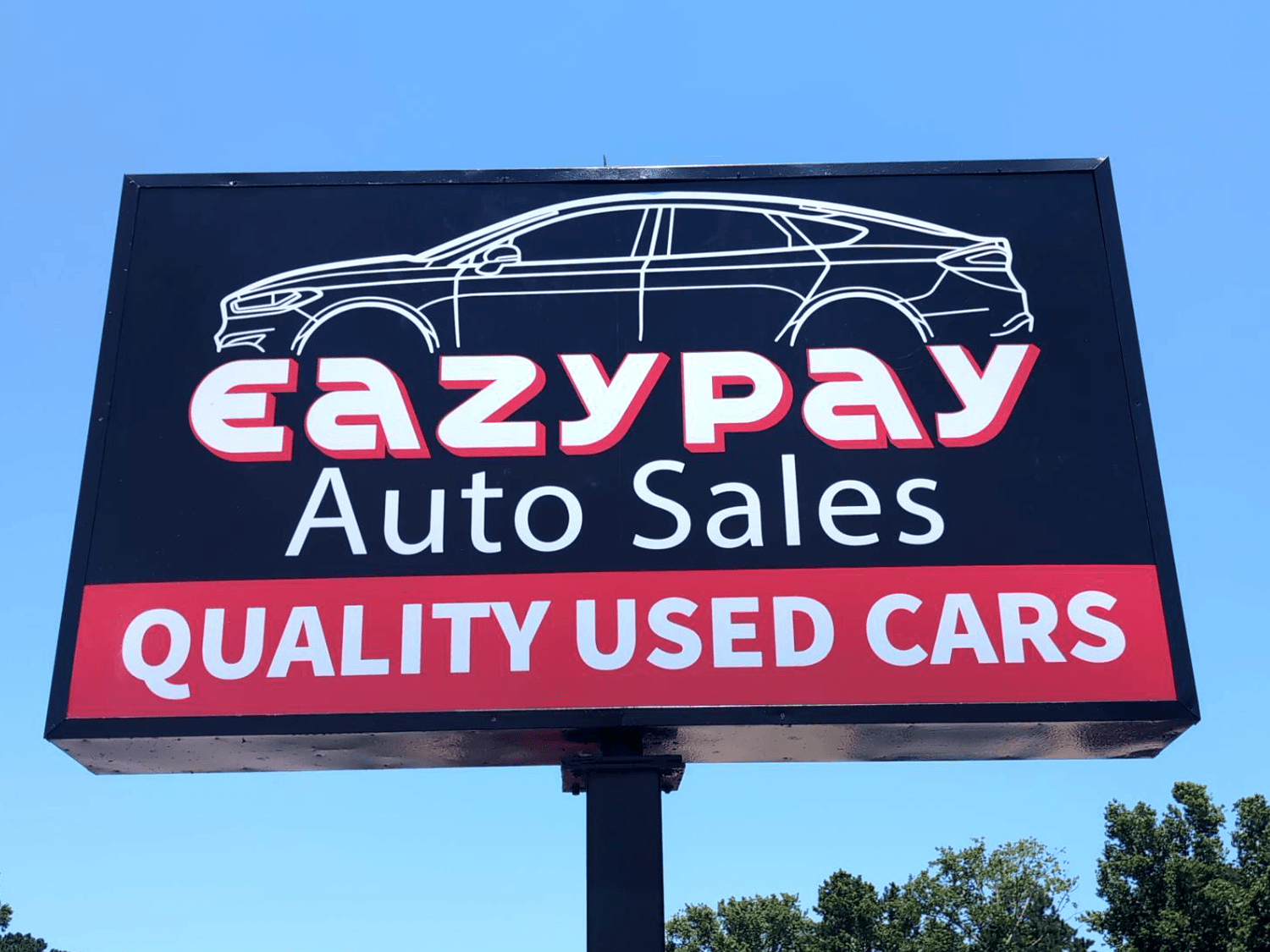
Every business owner in Augusta has driven past a competitor's sign and thought, that really stands out. Maybe it's a set of backlit channel letters glowing against a brick facade at dusk, or a monument sign anchoring the entrance to an office park on Washington Road. Whatever the form, great commercial signage has a way of making a business feel established, credible, and easy to find.
What many business owners don't realize is that commercial signage isn't just a cosmetic decision. It's a marketing decision. And in the Augusta and Central Savannah River Area (CSRA) market, it's one of the highest-return investments you can make.
This guide walks you through everything: the types of commercial signs, what different businesses typically need, how permitting works in the CSRA, and what the process looks like from start to install.
Why Commercial Signage Matters More Than You Think
Before we get into sign types, let's talk about what's actually at stake.
A University of Cincinnati and FedEx Office study found that 76% of consumers have entered a store they'd never visited before based solely on its sign. The same study found that 68% of consumers say signage reflects the quality of a business's products or services. That means your sign isn't just telling people where you are - it's making a first impression about who you are before a single word is exchanged.
Research from UPrinting's 2025 signage analysis backs this up: 8 in 10 Americans say signs influence them to walk into a store, and over 75% remember a business because of its signage long after the visit.
Put simply: if your signage is unclear, outdated, or absent, you are losing customers who drove right past you.
The Two Categories of Commercial Signage
Commercial signage falls into two broad buckets: exterior and interior. A well-branded business needs both, and each serves a distinct purpose. Exterior signage gets people to you. Interior signage takes over from there; guiding, informing, and reinforcing your brand once they're inside.
Let's break down each type.
Exterior Commercial Signage
Wall Signs and Building-Mounted Signs
The most common exterior sign for businesses with a storefront or office building. A wall sign attaches directly to the face of your building and typically displays your company name and/or logo. These can be fabricated from aluminum, acrylic, PVC, or composite materials, and can be illuminated or non-illuminated depending on your needs and your landlord's specifications.
Wall signs work well for virtually every business type - retail, medical offices, law firms, financial services, restaurants, and more. If you're in a strip center or multi-tenant building, a wall sign is often your primary exterior identifier.
Dimensional Channel Letter Signs
Channel letters are the three-dimensional, individually fabricated letters you see on most national retail and restaurant brands - and for good reason. They offer the highest visibility of any wall-mounted sign type, particularly at night or in low-light conditions.
There are four main styles:
- Front-lit (standard illuminated): The face of each letter is translucent and lit from within by LEDs. Bright, clean, and highly visible. The most common choice for retail.
- Halo-lit (reverse channel): The light glows behind and around each letter, creating a halo effect against the wall. Popular for upscale businesses, medical offices, and firms that want a sophisticated, premium aesthetic.
- Combination-lit: Both the face and the halo are illuminated, maximizing visibility and visual impact.
- Open-face neon-style: A more vintage or artisan look, popular in restaurants and hospitality settings.
Channel letters are typically the right choice when you want maximum visibility from a road or parking lot, when your business operates during evening hours, or when you're in a competitive retail environment and need your name to literally stand out.
Monument Signs
Monument signs are freestanding ground-level structures, typically positioned at the entrance to a property, business park, medical campus, or multi-tenant development. They communicate permanence and credibility in a way wall signs simply can't. They're architectural features as much as they are signage.
In the CSRA, Augusta's signage regulations typically limit monument signs to around 6-10 feet in height depending on the zoning district, with setback requirements from the public right-of-way. The good news: within those parameters, there's enormous flexibility in design with cabinet-style monuments, dimensional letter monuments, brick or stone-clad bases, illuminated vs. non-illuminated, single-tenant vs. multi-tenant directory panels.
Monument signs are a particularly strong investment for:
- Office parks and professional complexes
- Medical and dental practices
- Multifamily residential communities
- Churches and educational facilities
- Businesses set back from the road where building-mounted signs won't be visible
Pylon and Pole Signs
Pylon signs are the tall freestanding signs you see along highways and in large commercial shopping centers.
Pylon signs make the most sense for businesses in high-traffic corridors where drivers need to spot you from a distance - fuel stations, fast food, hotels, urgent care centers, and multi-tenant retail centers. If your business sits along I-20, Gordon Highway, or another major artery, a pylon sign may be worth the investment to capture that drive-by traffic.
Parking Signs
If your business has a parking lot - whether you manage it privately or share it with neighboring tenants - clear, professional parking signage does more than you might expect. Reserved spots, accessible parking, directional arrows, "No Parking" designations, and fire lane markings all fall into this category. Beyond convenience, many of these are legally required. ADA-compliant accessible parking signage, for example, must meet specific federal standards for height, placement, and messaging.
Interior Commercial Signage
Lobby and Reception Signs
Your lobby sign is often the first interior impression a client, patient, or visitor has of your organization. Dimensional letters in brushed metal, acrylic, or painted PVC mounted directly to the wall, or on a floating panel, communicate professionalism and brand consistency in a space that matters.
Law firms, medical practices, corporate offices, and financial institutions in particular invest heavily in lobby signage because that waiting room or reception area is doing real brand work while clients sit there.
Wayfinding and Directional Signs
Once someone is inside your space, wayfinding signage guides them where they need to go without requiring staff to play tour guide. In any space larger than a single open floor plan, suite numbers, department names, restroom signs, elevator lobbies, and conference room identifiers wayfinding signs are essential.
Well-designed wayfinding systems are consistent in typography, color, and finish across the entire space. They feel like part of the building rather than an afterthought. For healthcare facilities, educational campuses, and multitenant office buildings especially, a cohesive wayfinding system is not optional. It's a fundamental part of the visitor experience.
ADA-Compliant Signs
The Americans with Disabilities Act (ADA) sets specific requirements for certain types of interior signs; particularly those identifying permanent rooms and spaces. These include restroom signs, room identification signs, and accessible route signs. ADA requirements cover tactile lettering (raised characters), Braille, color contrast ratios, finish specifications, and mounting heights.
Non-compliance isn't just an accessibility issue. It's a legal liability. If your building is open to the public and your ADA signage doesn't meet current standards, you can be exposed to complaints and legal action. The good news is that ADA-compliant signs can be well-designed and on-brand. They don't have to feel institutional.
Vinyl Graphics and Window Graphics
Vinyl graphics are one of the most versatile and cost-effective signage solutions available. Window graphics, wall graphics, frosted privacy film, floor graphics, elevator wraps and vehicle wraps all fall under this category. They can transform a blank wall into a brand statement, give a glass storefront personality and privacy simultaneously, or turn your company vehicle into a moving billboard.
For new businesses, startups, or businesses in temporary spaces, vinyl is often the right first step before committing to permanent fabricated signage. For established businesses, it's a powerful complement to your permanent sign system.
What Type of Signage Does Your Business Actually Need?
Not every business needs every sign type - but most need more than they think. Here's a quick breakdown by situation:
Retail storefront: Channel letters or wall sign (illuminated), window graphics
Medical or dental practice: Monument sign (entrance), lobby dimensional letters, interior wayfinding, ADA suite signs
Office park / corporate campus: Monument sign, building address numbers, interior wayfinding, ADA signs, parking signs
Restaurant: Channel letters or cabinet sign, window graphics, parking signs
Multifamily residential: Monument sign (entrance), building identification, parking signs, pool/amenity area signs
Church or school: Monument sign, exterior identification, interior directional, ADA signs
Construction project: Job site signs, branded panels, safety signage
Navigating Signage Permits in Augusta and the CSRA
Here's something that surprises many business owners: most commercial signs in Augusta require a permit before installation. The City of Augusta (Richmond County) regulates 25 sign types across 7 zoning districts, with different rules for height, area, illumination, setbacks, and more.
According to the Augusta-Richmond County Sign Regulations, freestanding signs, building-mounted signs, and directional signs all require a permit application approved by the License and Inspection Department before installation.
The CSRA adds another layer of complexity: if your business is in North Augusta or Aiken County, South Carolina, you're operating under an entirely different jurisdiction with its own sign code. North Augusta adopted updated sign regulations as part of its comprehensive code update, and requirements there differ from the Georgia side of the river.
Permit requirements vary based on:
- Your zoning district
- The type of sign (wall, freestanding, monument, pylon, etc.)
- Sign dimensions (square footage and height)
- Whether the sign is illuminated
- Setback from the public right-of-way
This is one area where working with an experienced local sign company pays for itself. Navigating permit applications, ensuring your sign design meets code before fabrication begins, and coordinating with the right local departments takes time and expertise that most business owners don't have bandwidth for.
At Keen Signs & Graphics, permit management is part of our process. We've worked in the CSRA long enough to know the landscape on both sides of the river.
The Signage Process: What to Expect From Concept to Installation
Whether you're getting your first business sign or refreshing an entire campus signage system, the process typically follows these stages:
1. Consultation and site survey. We assess your location, your business type, your goals, and your existing brand standards. For exterior signs, a site survey is essential. We need to know building dimensions, mounting surfaces, setbacks, and existing electrical infrastructure.
2. Planning and Proofing. We prepare proofs so you can see exactly how your sign will look before anything is fabricated. This is also when we flag any specifications that may conflict with local sign codes.
3. Permitting. We prepare and submit the permit application on your behalf, including any required sign plans or engineering documents.
4. Fabrication. Once the permit is approved, your sign is custom-fabricated at our Augusta facility. All of our signs are built to the specifications of your exact location.
5. Installation. Our installation crew handles delivery and professional installation. For illuminated signs, we coordinate electrical connection as part of the process.
From consultation to installation, commercial sign project timelines vary depending on size and scope. The earlier in your planning process you start the conversation, the better.
Why Working with a Local Augusta Sign Company Matters
When you work with a national sign franchise, your project is often managed remotely, fabricated out of state, and installed by a subcontractor who's never been to your location. When something goes wrong, like a permit issue, a mounting problem, a color mismatch, you're navigating a phone tree.
When you work with a local company, you're working with people who drive past your building, who know the permitting process at the Richmond County License and Inspection Department, and who will still be here when your sign needs maintenance five years from now.
Keen Signs & Graphics has served the Augusta and CSRA business community for decades. Our work is visible throughout the area on medical campuses, multifamily communities, educational institutions, construction projects, and commercial storefronts across the region. We handle every step of the process under one roof: design, fabrication, permitting, and installation.
If you're ready to talk about what your business needs, [we'd love to hear from you. Request a quote here.
Have questions about signage permits, sign types, or what's right for your specific location? Visit our Business Signage FAQ page or give us a call at (706) 364-2151.
